
Many people view chiropractic care purely as a remedy for physical pain-a way to crack a stiff neck or ease a nagging lower back. But there is a much deeper connection between the health of your spine and your overall well-being. If you find yourself tossing and turning at night, unable to quiet your mind despite being physically exhausted, the root cause might not be your thoughts – it could be your nervous system. Below, we look at how structural alignment directly influences your body’s ability to transition into deep, restorative rest.
We have all been there. You get into bed after a long day, turn off the lights, and close your eyes – thinking that your body will shut down immediately after a long day of hard work, but your brain stays wide open. Hours pass as you keep staring at the ceiling, tossing, turning, and trying to find a comfortable position.
When people think of chiropractic care, they usually think of pain relief – like fixing a stiff neck, lower back pain, or even correcting posture. But one of the most common pieces of feedback our clients report after starting care is completely unexpected:
“Hans, I am able to sleep through the night.”
Is it a coincidence? Not at all. Today, we’re diving into the neurological science connecting your spinal alignment to a deep, restorative night’s sleep.

The Tug-of-War: Sympathetic vs. Parasympathetic
To understand insomnia and sleep quality, we have to look at the Autonomic Nervous System (ANS). Your ANS functions like a see-saw with two distinct sides that regulate your state of rest:
This is your gas pedal. It ramps up your heart rate, floods your body with cortisol (the stress hormone), and sharpens your alertness to handle daily stressors.
This is your brake pedal. It slows your heart rate, drops your blood pressure, relaxes your muscles, and allows your body to enter deep, restorative sleep.
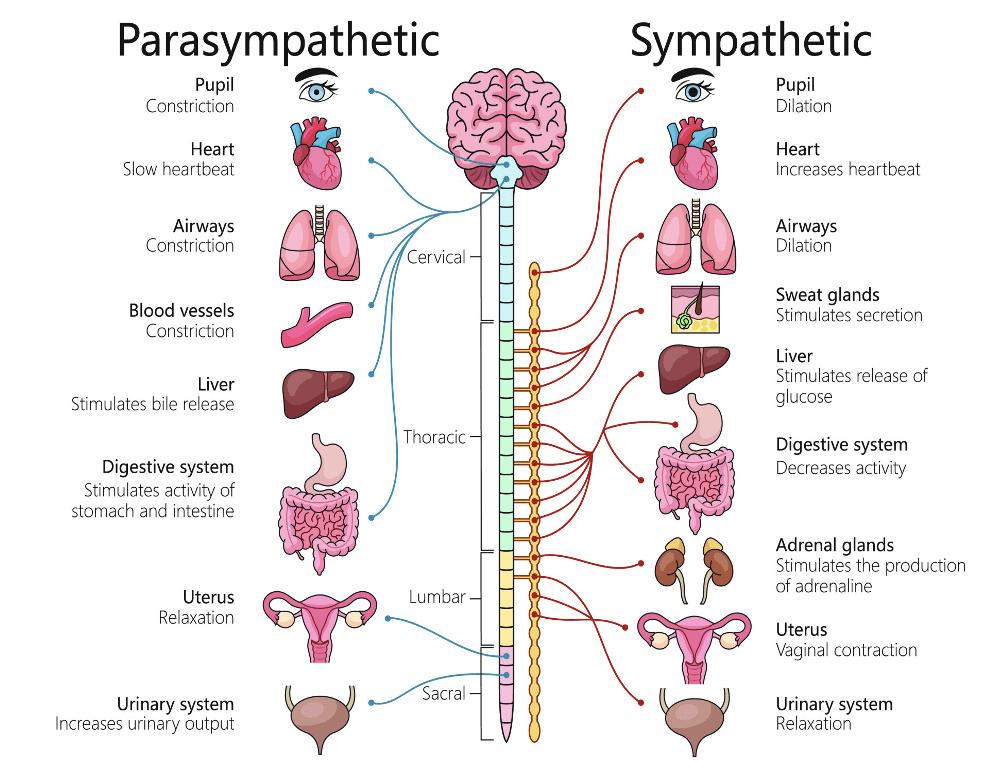
The Subluxation Problem
A misaligned or restricted spine (aka vertebral subluxation) can break this balance and put more pressure on the gas pedal, constantly triggering the “Fight or Flight” response.
When there is a vertebral subluxation in your spine, it sends continuous, low-grade stress signals up to your brain. Even if you are completely exhausted, your nervous system feels physically threatened and stays stuck “on.” You can’t drift into deep sleep when your body thinks it needs more energy to run away from a bear.
How a Specific Adjustment Restores Better Sleep
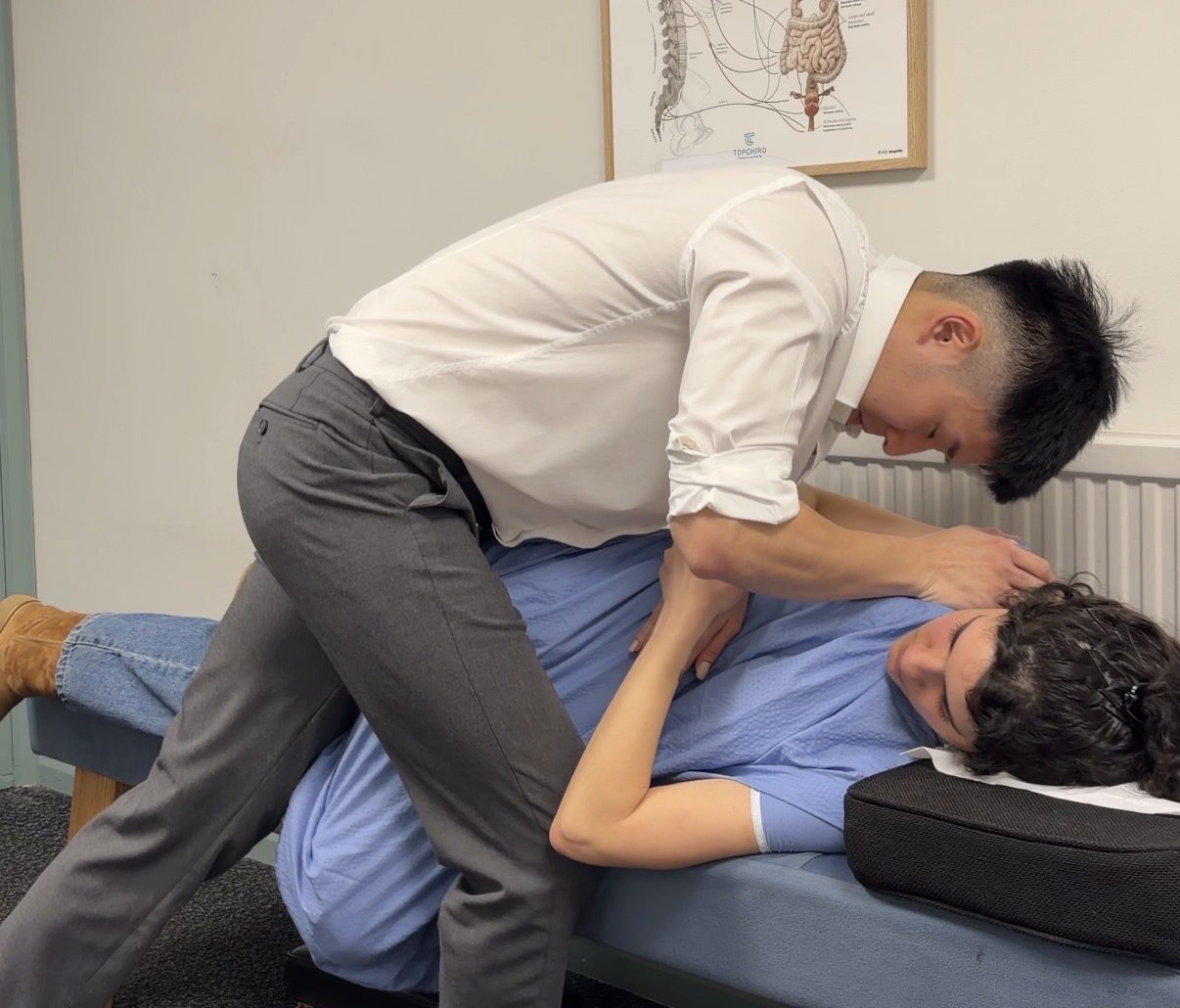
By providing a highly precise adjustment, we aren’t just shifting bone; we are making an impact on your nervous system.
- Quiets Stress Signals: Removing vertebral subluxation quiets down those chronic stress signals.
- Restores Balance: This acts as a physical reset that allows your see-saw to tip back toward the Parasympathetic (“Rest and Digest”) state.
When your nervous system finally drops its guard, your natural rhythms can take back control, making it vastly easier to fall asleep and, more importantly, stay asleep.
A Quick Tip for Tonight: Check Your Pillow Alignment
While chiropractic care targets the root cause of your structural restrictions, your sleep environment matters too. A massive mistake many insomnia sufferers make is using a pillow that is either too thick or too thin.
-
Our Goal: A neutral cervical curvature.
-
The Risk: If your pillow forces your chin toward your chest (too high) or drops your head backward (too low), you are placing mechanical stress on your cervical spine for eight hours straight.
The Takeaway: Keep it level!
Stop Guessing. Start Resting.
If you are tired of relying on sleep supplements or waking up feeling like you just went ten rounds of a 100m sprint, it’s time to stop guessing. Your sleep issues might not be an unchangeable trait; they could simply be a structural nervous system that has lost its ability to turn “off.”
Let’s look at the data, map your spine, and help your nervous system find the rest it deserves. Feel free to book a consultation at the clinic and let’s get to the root cause together.
Hans Chew MChiro
References
- Haavik H, Niazi IK, Amjad I, Kumari N, Ghani U, Ashfaque M, et al. Neuroplastic responses to chiropractic care: Broad impacts on pain, mood, sleep, and quality of life. Brain Sci. 2024;14(11):1124.
- Haavik H, Niazi IK, Amjad I, et al. The effects of 12 weeks of chiropractic spinal adjustments on physiological biomarkers in adults: A pragmatic randomized controlled trial. Sci Rep. 2025;15(1):126.
- Finnell Chiropractic Research Group. Chiropractic care & nervous system regulation: What the science says. 2026 Mar 26.
