When you begin chiropractic care, especially care focused on the nervous system, it’s natural to expect quick results. Yet for many people, healing doesn’t happen instantly. Instead, it can feel slow, inconsistent, or even delayed.
This can be frustrating. However, when you understand how the autonomic nervous system (ANS) works, and how it responds to long-term stress- this pattern starts to make sense.
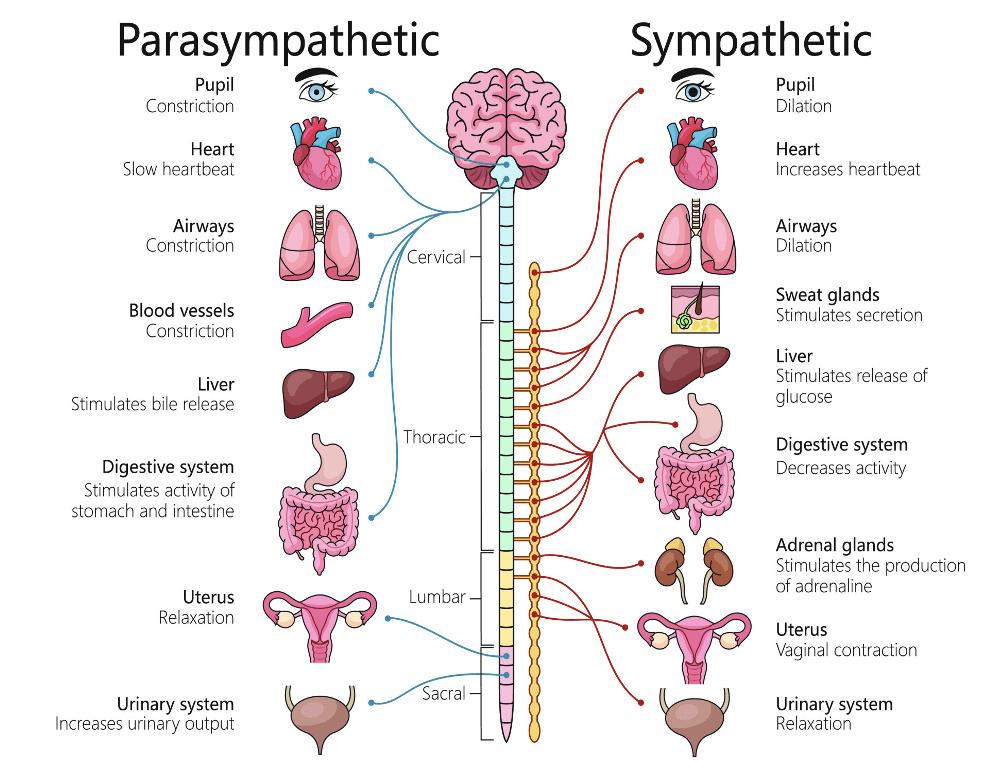
A Quick Reminder: Your Nervous System Runs Everything
The autonomic nervous system is responsible for maintaining balance (homeostasis) across the entire body (McCorry, 2007).
It directly controls:
- Heart rate and blood pressure
- Digestion and metabolism
- Hormones and inflammation
- Immune function and recovery
This system has two key branches:
- Sympathetic Nervous System (SNS): Fight or flight
- Parasympathetic Nervous System (PNS): Rest and heal
When these systems are balanced, your body adapts easily and heals efficiently. But when stress becomes chronic, that balance breaks down (Chrousos, 2009).
From Overdrive to Burnout: Why the System Slows Down
The nervous system responds to stress in stages:
- Alarm (Overdrive)
- Resistance (Compensation)
- Exhaustion (Depletion)
By the time many people begin chiropractic care, they are often in a state of exhaustion. This is a key reason healing can feel delayed.
Why You May See Slow or Delayed Improvement
- You’re rebuilding a depleted system: This reflects the effects of chronic stress and allostatic load.
- Your body heals in a specific order: The body restores internal balance before symptoms improve (Chrousos, 2009).
- Healing isn’t linear: Recovery often includes variability as adaptability returns (Koolhaas et al., 2011).
- Long-standing patterns take time to unwind: Early life stress can shape long-term nervous system function (Shonkoff & Garner, 2012).
- HRV changes before you feel it: Heart Rate Variability reflects nervous system adaptability (Shaffer & Ginsberg, 2017)
- Your system is learning to adapt again: Chronic stress can keep the body in a prolonged defensive state (Brosschot et al., 2006). Chiropractic care may support improved brain-body communication (Haavik & Murphy, 2012).


What This Means for You (or Your Child)
If progress feels slow, it doesn’t mean care isn’t working. It often means the body is rebuilding from a deeper level.
Signs You’re Moving in the Right Direction
- Better sleep patterns
- Subtle increases in energy
- Improved mood
- Less intense stress responses
Healing Was Never Meant to Be Rushed
Your nervous system was designed to regulate, adapt, and heal but only when it has the capacity to do so. Chiropractic care helps restore the conditions that allow healing to happen. If your journey feels slower than expected, it may not be a setback, it may be your body rebuilding the foundation it needs to heal properly.
Paris Georgiadis Mchiro
References
- McCorry, L. K. (2007). Physiology of the Autonomic Nervous System
- https://www.ncbi.nlm.nih.gov/pmc/articles/PMC1959222/
- Chrousos, G. P. (2009). Stress and disorders of the stress system
- https://www.ncbi.nlm.nih.gov/pmc/articles/PMC5579396/
- Koolhaas, J. M. et al. (2011). Stress revisited
- https://www.ncbi.nlm.nih.gov/pmc/articles/PMC3102612/
- Shonkoff, J. P., & Garner, A. S. (2012). The lifelong effects of early adversity https://www.ncbi.nlm.nih.gov/pmc/articles/PMC3425445/
- Shaffer, F., & Ginsberg, J. P. (2017). HRV Metrics and Norms
- https://www.ncbi.nlm.nih.gov/pmc/articles/PMC5624990/
- Brosschot, J. F. et al. (2006). The perseverative cognition hypothesis
- https://pubmed.ncbi.nlm.nih.gov/16460180/
- Haavik, H., & Murphy, B. (2012). Spinal manipulation and sensorimotor integration https://www.ncbi.nlm.nih.gov/pmc/articles/PMC3534121/