
Many clients come into the clinic because they’ve heard chiropractic can help with conditions like lower back pain, sciatica, neck pain, migraines, shoulder issues- you name it. However, there is usually a question in the back of their minds: How does the adjustment actually work? Is it just randomly cracking the spine? Does a louder noise mean a better outcome?
Today, we are going to dive into the science behind the adjustment, explained in plain language.

The Focus: Your Master Controller
Before we talk about the spine, we have to talk about the Nervous System. This system consists of your brain, your spinal cord (which is protected by your spine), and the numerous nerve branches that exit between the vertebrae.
Signals transmit through these nerves in milliseconds, playing a vital role in how your muscles and body function. For example, the nerves from your lower neck and upper back (C5 to T1) supply your upper limbs – your shoulders, arms, hands, and fingers. When a nerve signal isn’t transmitting smoothly to the targeted area, symptoms begin to develop.
Think of it like this: If I am throwing a baseball but there is a disruption in the nerve signal to my arm, I can still carry out the motion, but I won’t have my full explosive force, precision, or speed. Furthermore, when a spinal joint is restricted, it stops sending clear information about where your arm is in space, known as proprioception, which forces your brain to “second-guess” the movement, slowing down your response time and killing your power.
The Gonstead System: Precision is Key
There are several different approaches to chiropractic care, but in our clinic, we utilise the Gonstead System. We use a 5-step analysis to find the root cause of your issue:
- History Taking
- Static Palpation
- Motion Palpation
- Instrumentation5. Imaging (X-rays)
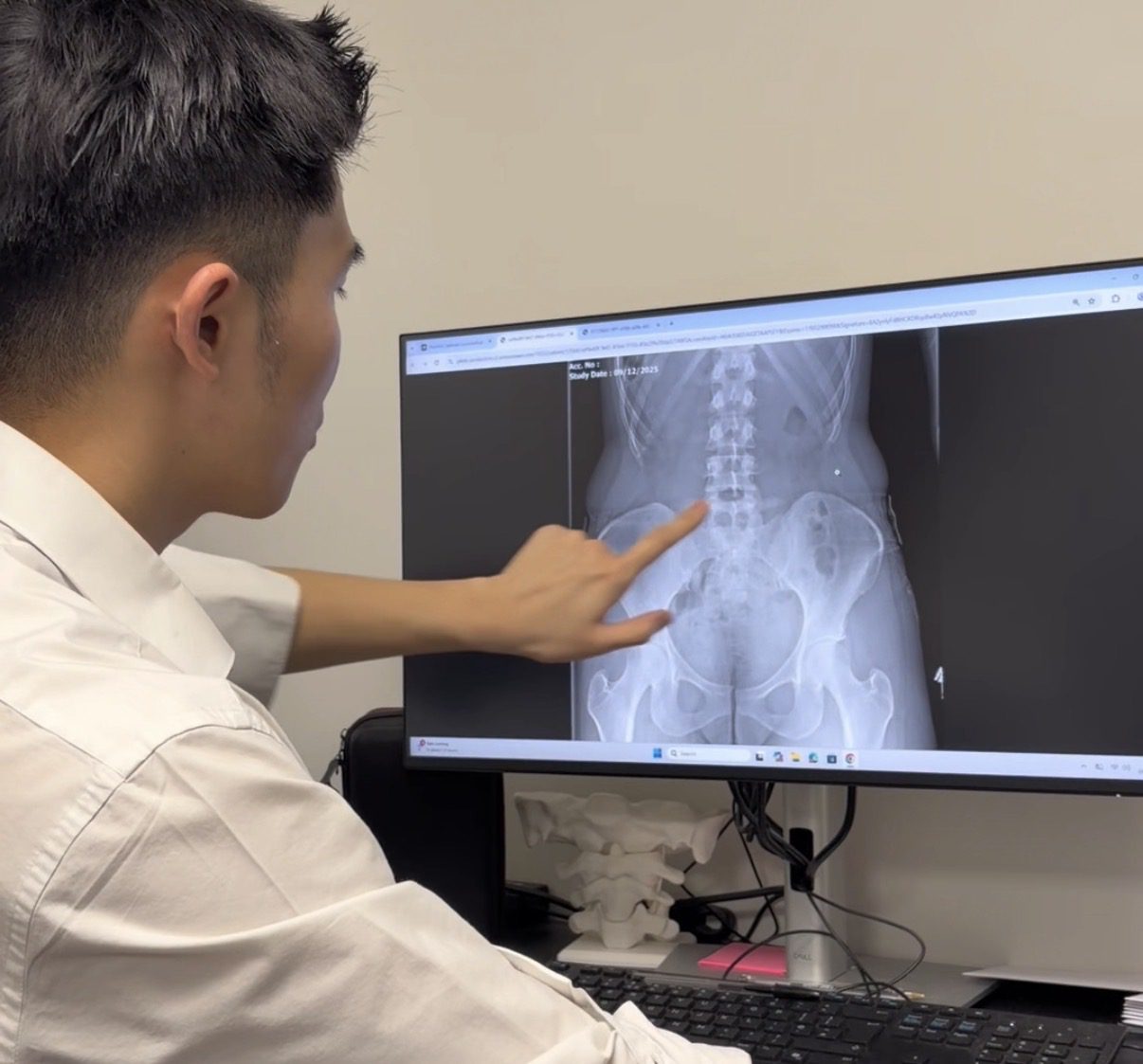
- Imaging (X-rays)
These five steps provide a clear “map” of your condition, allowing us to pinpoint the exact spinal segment that needs to be targeted. Precision is everything. An adjustment must be specific to be effective.
If you are curious to learn more about the Gonstead system, please refer to our previous blogs which have a very clear explanation of the system and why we use it.
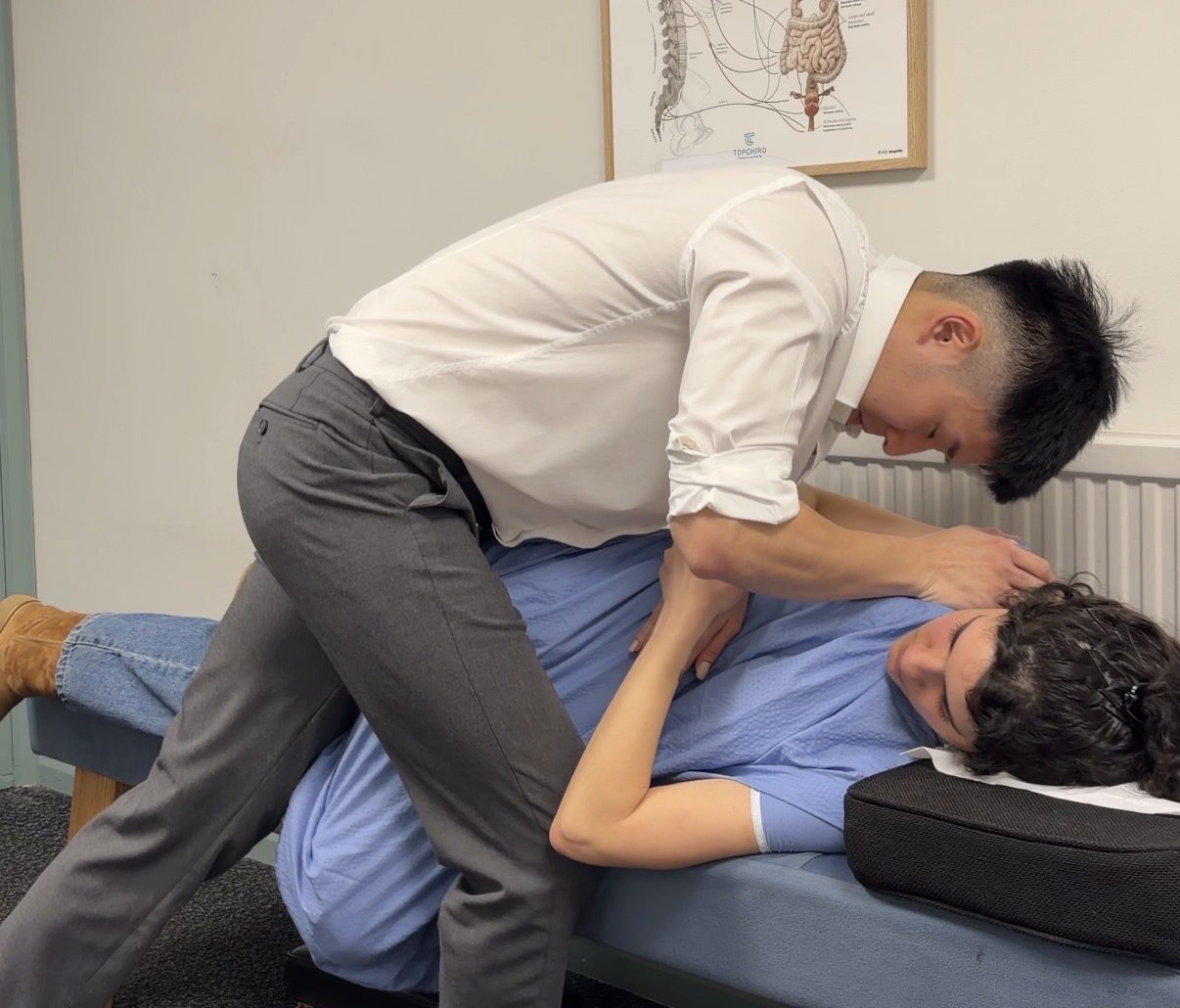
By performing a specific adjustment, we are aiming to reduce the nerve interference on the spine, allowing the nerve signal to be transmitted at its full potential. It is not about “randomly cracking” the back; it is about the clinical analysis of the root cause and the precision of the correction.
What about that “Pop” sound?
I often get asked: “Hans, what does that sound represent? Does it mean the adjustment worked better?” The answer is simple: it is just a gas bubble being released from the joint.
It is very similar to the sound you hear when you crack your knuckles. While the sound can be satisfying, it isn’t the goal. The goal is the reduction of nerve interference and the restoration of proper function.
Chiropractic is about science and precision, not guesswork. We do not guess in our clinic. If you want to see how your nervous system is actually performing, or if you are dealing with certain conditions, feel free to book a consultation and let’s find the root cause together.
References
- Pickar JG. Neurophysiological effects of spinal manipulation. The Spine Journal. 2002 Oct;2(5):357-71.
- Plaugher G, editor. Textbook of Clinical Chiropractic: A Specific Biomechanical Approach [Gonstead]. 2nd ed. Baltimore: Williams & Wilkins; 1993.3.
- Herzog W. The biomechanics of spinal manipulation. Journal of Bodywork and Movement Therapies. 2010 Jul;14(3):280-6.
- Navid MS, Haavik H, Niazi IK, Lelic D. Neuroplastic responses to chiropractic care: Broad impacts on pain, mood, sleep, and quality of life. Brain Sciences. 2024;14(11):1124. Available from: https://www.mdpi.com/2076-3425/14/11/1124
- Holt K, Haavik H, Lee AC, Murphy B, Elley CR. Effectiveness of chiropractic care in improving sensorimotor function and agility in athletes: A randomized controlled trial. Journal of Athletic Training. 2024;59(2):142-151.
