
If you’re experiencing back or neck pain, you may have been told you have a slipped disc. Despite how common the term is, it’s actually misleading. A spinal disc doesn’t “slip” out of place. Instead, the condition refers to a herniated or bulging disc, where disc material pushes beyond its normal boundary and may irritate nearby nerves.
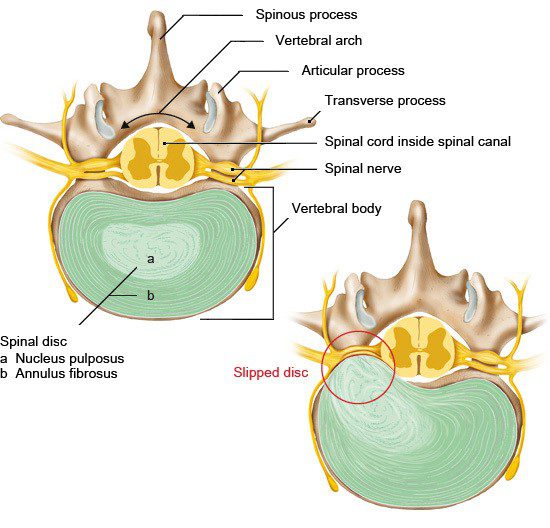
Spinal discs sit between the vertebrae of the spine and act as shock absorbers. Each disc has a tough, flexible outer layer and a soft, gel-like centre known as the nucleus pulposus. Over time or under strain, the outer layer can weaken or develop small tears, allowing the inner material to bulge outward. When this happens, the disc itself isn’t painful, but rather pressure on nearby nerves is what causes symptoms.
Common Symptoms
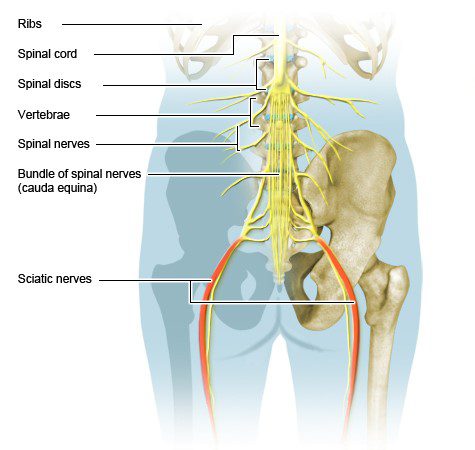
The symptoms of a “slipped” disc vary widely. Some people experience significant pain, while others may have no symptoms at all. Common symptoms include lower back or neck pain, difficulty bending or straightening the spine, numbness or tingling in the arms or legs, muscle weakness, and pain that travels down the leg, often referred to as sciatica. A slipped disc symptoms can improve naturally within a few weeks, often in less than six weeks, although this does not always happen, so staying active and managing pain appropriately is usually recommended. In rare cases, a slipped disc may cause more serious symptoms such as severe weakness, paralysis, or bladder and bowel problems. These symptoms require urgent medical attention.
What Causes a “Slipped” Disc?
In most cases, slipped discs develop gradually due to normal age-related wear and tear. As we get older, spinal discs lose fluid, elasticity, and resilience, making them more vulnerable to strain. This process varies from person to person and is a normal part of ageing.
Other contributing factors include poor lifting technique, repetitive bending or twisting, prolonged vibration (such as driving or operating machinery), inactivity, excess body weight, lack of proper diet and hydration, and lastly, sudden injury or trauma. Spinal dysfunction, including subluxations (areas where spinal joints are not moving or functioning correctly), may also contribute to uneven loading of the discs over time.
Can Slipped Discs Be Prevented?
While not all slipped discs can be avoided, the risk can be reduced by maintaining a healthy and active lifestyle. Regular exercise helps keep the spine strong and flexible, while good posture and safe lifting techniques protect the discs from unnecessary strain. Keeping a healthy body weight also reduces stress on the spine.
How We Can Help You
Chiropractic care can be an effective way to manage symptoms associated with a slipped disc and support recovery. Following a thorough assessment, your chiropractor will identify areas of spinal dysfunction, including subluxations, which may be contributing to pain, restricted movement, or nerve dysfunction.
Care may include gentle chiropractic adjustments aimed at improving spinal motion and addressing these subluxations. We also provide practical advice on posture, workplace ergonomics, and daily habits to help reduce strain and lower the risk of future episodes.
Although the term “slipped disc” can sound alarming, it is often a manageable condition. With the right combination of movement, self-care, and professional chiropractic support, most people recover well and return to normal activities with confidence.
Paris Georgiadis (MChiro)