
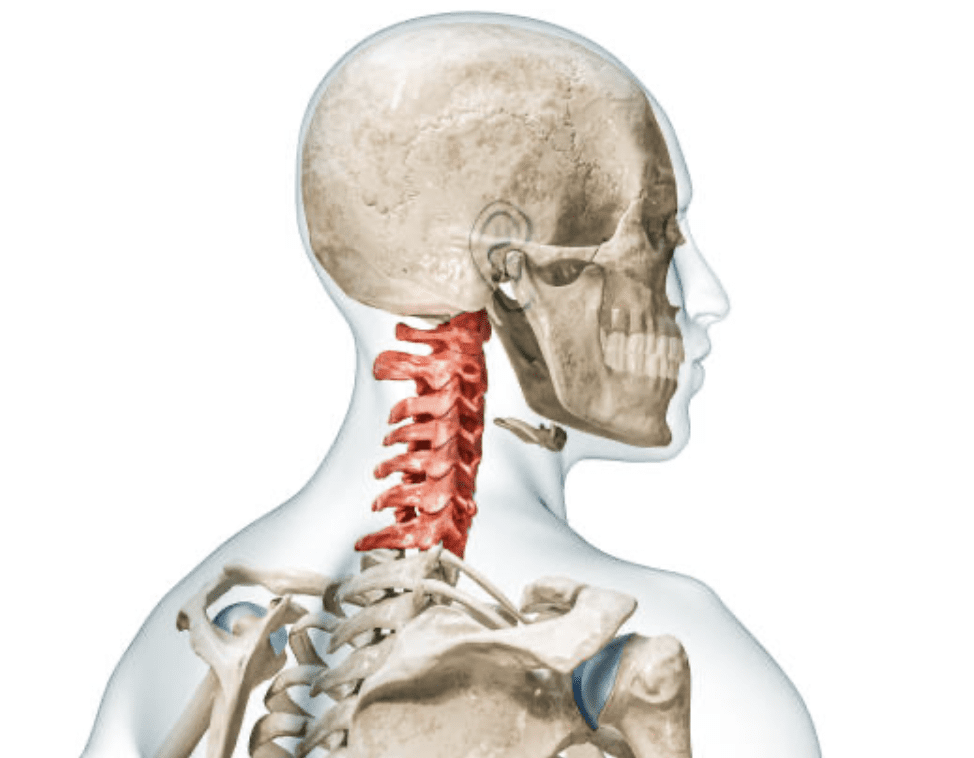
The human body relies on an intricate network of sensory and motor systems to maintain balance, posture, and co-ordinated movement. At the centre of this system lies a small but powerful group of muscles in the upper cervical spine. These muscles are located between the skull and the upper cervical vertebrae (C0-C2) and play a critical role in proprioception and the control of body movement. Despite their size, their influence on overall neuromusculoskeletal function is profound.
Understanding Proprioception
Proprioception is the body’s ability to sense its position and movement in space without conscious effort. It allows us to walk without watching our feet, maintain balance, and make precise movements. This system depends on specialised sensory receptors called mechanoreceptors, which are found in muscles, joints, and connective tissues. These receptors continuously send information to the brain about joint position, muscle length, and movement velocity.
The upper cervical spine contains one of the highest densities of proprioceptive receptors in the entire body, making it a key contributor to postural control and motor co-ordination.
Muscle Function and Body Control
The Role of Upper Cervical Muscles
The deep muscles of the upper cervical region, such as the suboccipital muscles (including rectus capitis posterior major and minor, and obliquus capitis muscles) are uniquely designed for precision rather than power. They are rich in muscle spindles, the sensory organs responsible for detecting subtle changes in muscle length and tension. Because of this high spindle density, these muscles act as fine-tuning sensors for head and neck position. They work closely with the visual and vestibular systems to help regulate balance, eye movements, and overall body orientation. Even minor dysfunction in these muscles can disrupt sensory input to the brain, potentially leading to symptoms such as dizziness, poor posture, neck pain, headaches, and impaired movement co-ordination.
Upper Cervical Function and Whole-Body Movement
Head position strongly influences alignment of the spine and movement patterns throughout the body. Altered proprioceptive input from the upper cervical region can affect muscle tone, postural reflexes, and motor control well beyond the neck itself. Research has shown that disturbances in cervical proprioception may contribute to altered gait patterns, balance deficits, and compensatory movement strategies in the trunk and extremities. This highlights the concept that the upper cervical spine does not function in isolation; it acts as a central hub for sensorimotor integration.
Chiropractic Care and Upper Cervical Proprioception
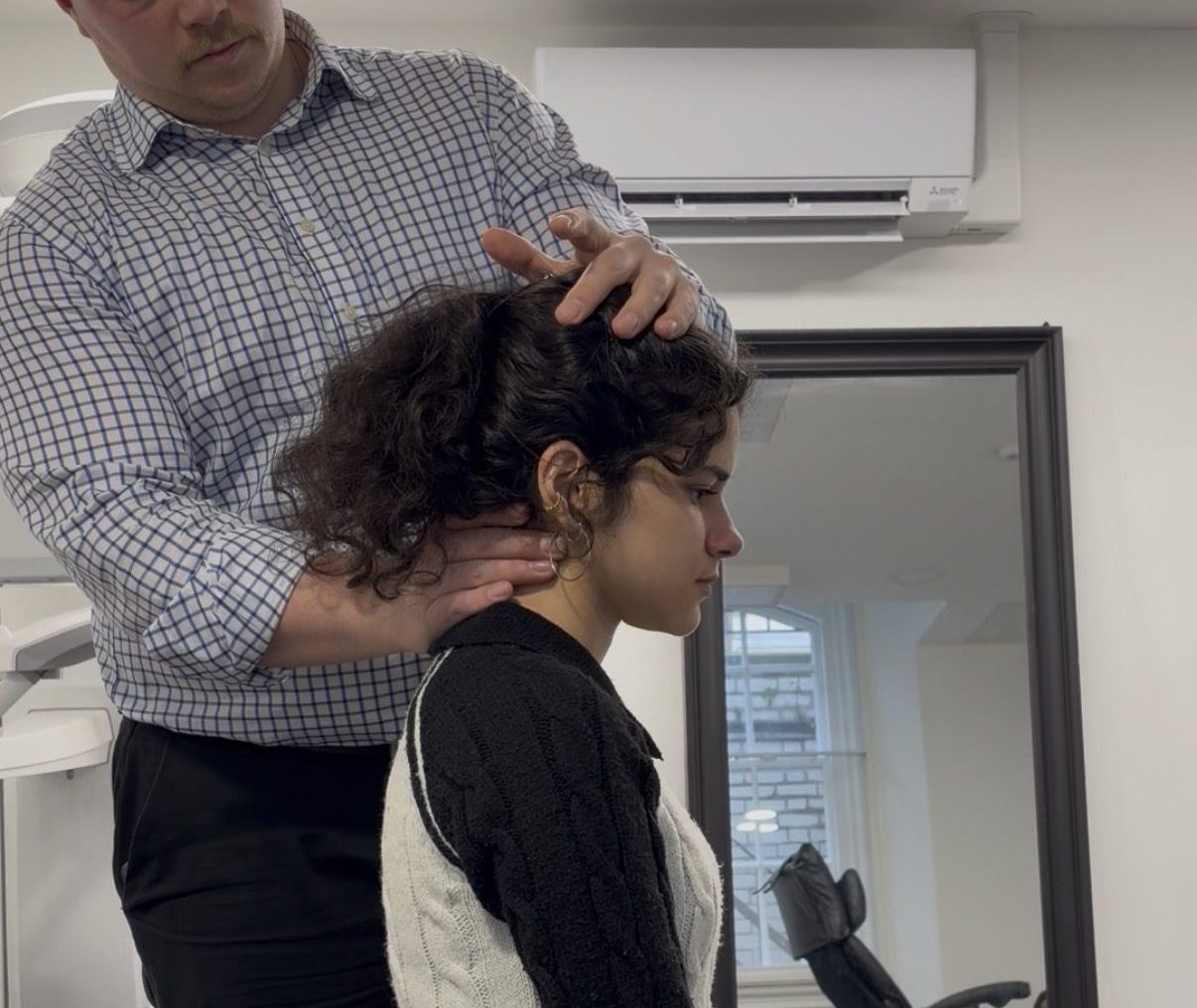
Chiropractic care places a strong emphasis on spinal alignment, joint mobility, and nervous system function. In the context of the upper cervical spine, chiropractic assessment and care aim to identify and address joint restrictions, muscle dysfunction, and altered movement patterns that may interfere with normal proprioceptive input.
Gentle, specific chiropractic adjustments to the upper cervical region may help restore normal joint motion and reduce abnormal muscle tension. This can improve the quality of sensory feedback sent to the central nervous system, supporting better posture, balance, and co-ordinated movement. When combined with rehabilitative exercises, postural training, and patient education, chiropractic care can play a valuable role in optimising upper cervical function and overall neuromuscular control.
Conclusion
The upper cervical muscles are essential contributors to proprioception and the control of body movement. Their high concentration of sensory receptors allows them to influence balance, posture, and motor coordination throughout the entire body. Dysfunction in this region can have widespread effects, underscoring the importance of proper assessment and care.
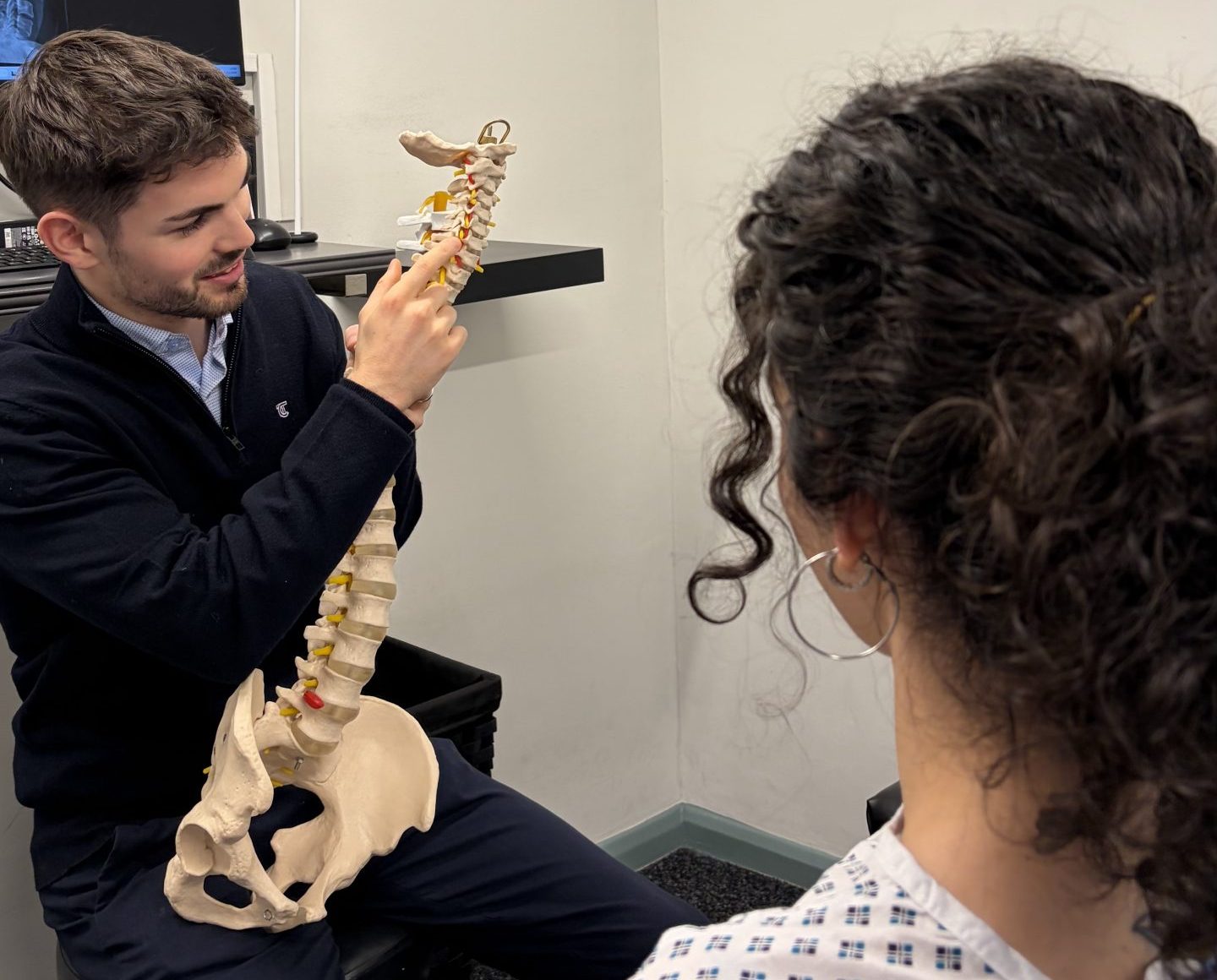
Chiropractic care, with its focus on spinal mechanics and nervous system integrity, is uniquely positioned to support the health of the upper cervical spine. By addressing dysfunction in this critical area, chiropractic care may help enhance proprioceptive input, improve movement efficiency, and promote overall physical well-being.
Optimise Your Movement Today
Is a lack of balance or chronic neck tension holding you back? Experience the benefits of expert spinal alignment and neuromuscular support.
Book Your Appointment Here or learn more about our Chiropractic Care Services.
References
- Kulkarni, V., Chandy, M. J., & Babu, K. S. (2001). Quantitative study of muscle spindles in suboccipital muscles of human foetuses. Neurology India, 49(4), 355–359.
- Boyd-Clark, L. C., Briggs, C. A., & Galea, M. P. (2002). Muscle spindle distribution, morphology, and density in longus colli and multifidus muscles of the cervical spine. Spine, 27(7), 694–701.
- Treleaven, J. (2008). Sensorimotor disturbances in neck disorders affecting postural stability, head and eye movement control. Manual Therapy, 13(1), 2–11.
- Richmond, F. J. R., et al. (1999). Proprioceptive contributions of the cervical spine to head movement control. Journal of Neurophysiology, 82(2), 787–799.
- Haavik, H., & Murphy, B. (2012). The role of spinal manipulation in addressing disordered sensorimotor integration and altered motor control. Journal of Electromyography and Kinesiology, 22(5), 768–776.
